AI is changing the architecture industry. Not simply by generating images faster or writing text, but above all by gradually changing the way architects work.
Where architects and architectural modellers previously had to process large amounts of information manually, new opportunities are emerging to make better use of existing data. This raises important questions. Which tasks will change? What does this mean for the architect's role? And how can design quality be maintained as software takes on an increasing share of preparatory work?
The future of architecture is therefore not just about new technology. It is also about how architectural practices apply their expertise, organise their processes and deliver value to clients.
AI in architecture is no longer a thing of the future
Artificial intelligence is already being used across the architecture industry. According to the Royal Institute of British Architects (RIBA)'s 2026 AI research, 74% of the architectural practices surveyed use AI in at least some of their projects.
This does not mean that the entire design process has been automated. AI is being applied in different ways, and the extent to which practices use the technology varies considerably.
Notably, greater use of AI does not automatically lead to better designs. In the same RIBA research, only 17% of respondents said that AI had improved their designs.
That distinction matters. A process can become faster without necessarily improving the quality of the final result. For architects, the challenge is therefore not simply to adopt AI, but to identify where the technology genuinely adds value.
From producing everything yourself to reviewing, directing and refining
A significant part of the work within an architectural practice involves processing and developing information. Drawings are updated, models are built, design options are explored and project information is passed between stakeholders.
AI can help produce an initial result for some of these tasks. This creates a different way of working: rather than always starting from scratch, architects and modellers can review, correct and further develop a generated starting point.
This may sound straightforward, but it requires new skills. Working with AI means not only knowing how to use a tool, but also being able to assess whether its output is correct.
A model may look convincing while still containing errors. A design proposal may be visually appealing but fail to account adequately for structural requirements, building regulations or its surroundings.
This is precisely why professional expertise remains essential. AI can support the production of information, but evaluating that information requires professional judgement.
What changes during an architectural project?
AI will not have the same impact at every stage of a project. Some tasks are better suited to automation than others.
During the early design stages, digital tools can help architects explore ideas and alternatives more quickly. This can create more room for experimentation, although clear design principles remain essential.
During technical development, the emphasis shifts to accuracy, consistency and quality control. Automation can be particularly useful for repetitive modelling and information-processing tasks. At the same time, errors become more costly if they go unnoticed at this stage.
In project coordination, AI can help organise information and prepare communications. However, a summary or automatically generated document does not replace the agreements and checks required between the parties involved.
The biggest change is likely to come when these individual stages become better connected. Not because one AI tool takes over everything, but because information needs to be entered or recreated less frequently.
Why existing drawings and reliable data are becoming more important
Architects work with large amounts of project information every day. This includes DWG drawings, floor plans, sections, elevations, 3D models and technical documents.
One of the main challenges is that this information cannot always be reused directly. A drawing that works well for one stage of the process is not necessarily ready to use in the next.
This is where automation presents an interesting opportunity. When software can interpret existing information and turn it into a usable starting point, some of the preparatory work may no longer need to be repeated.
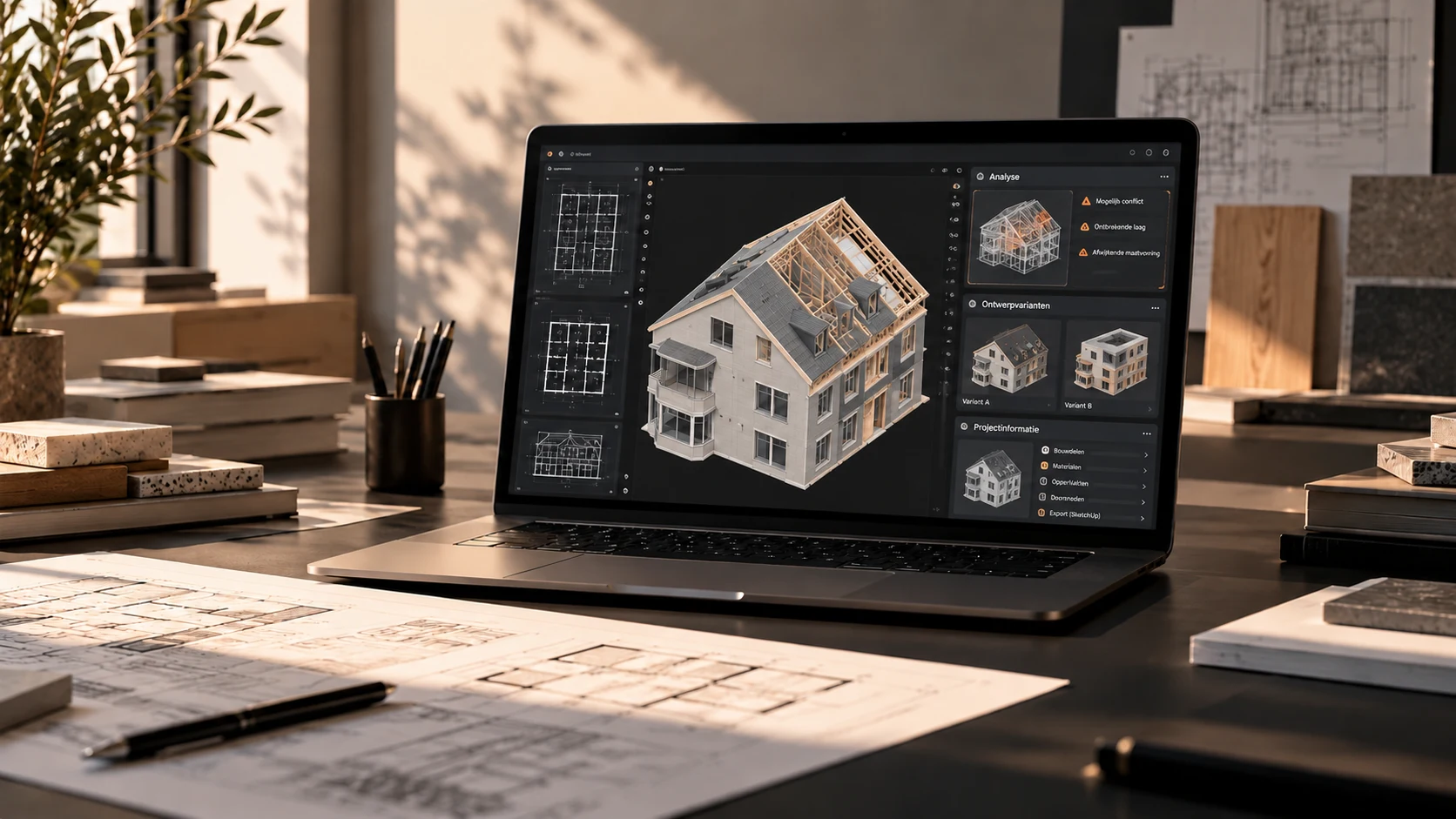
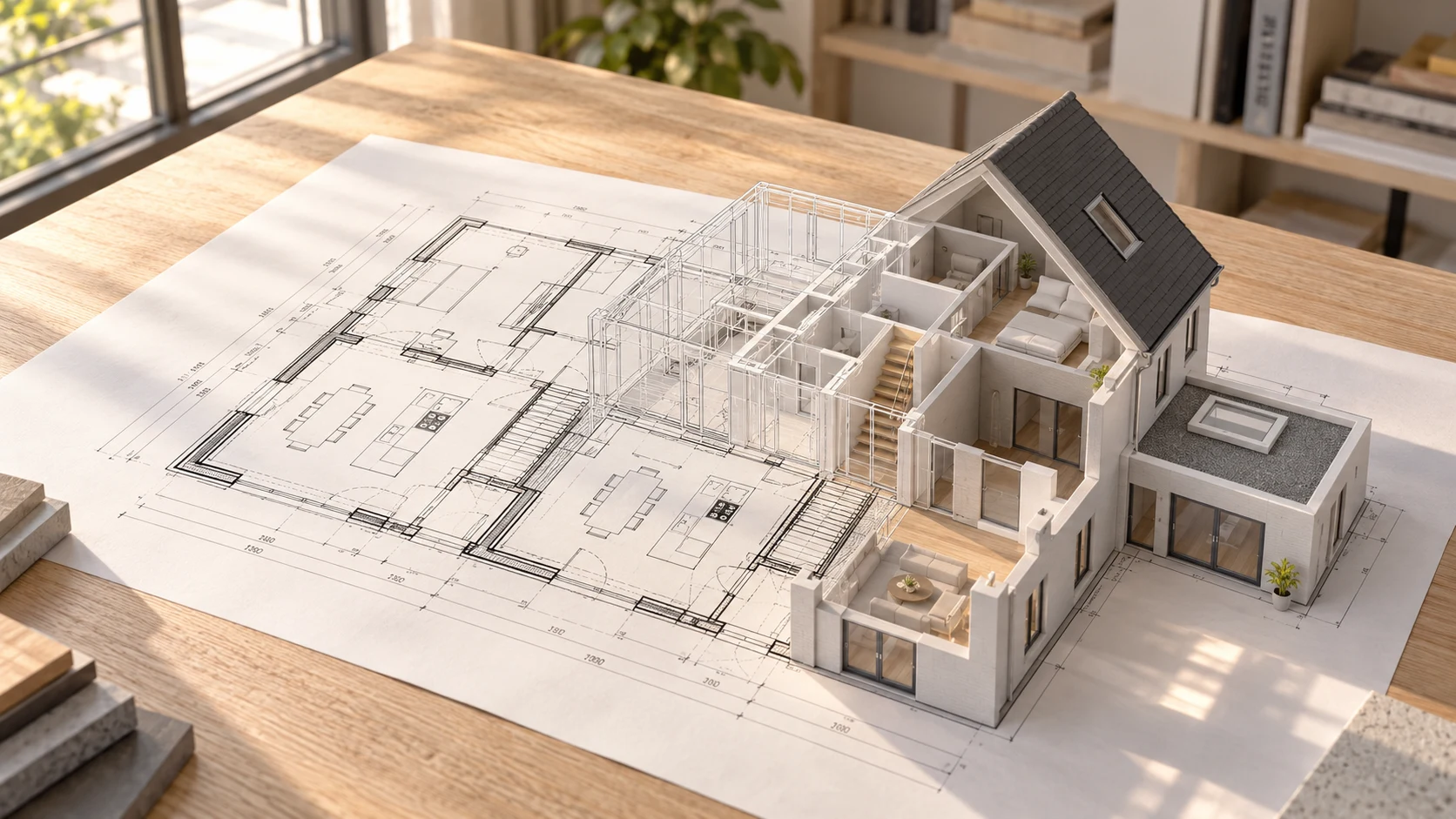
Arqetta focuses on one specific aspect of this development. The platform is being developed to use existing DWG drawings as the basis for editable 3D base models that can be further developed in SketchUp.
The distinction between a 3D base model and a complete BIM model remains important. BIM is not just about geometry, but also about structured building information and how that information is managed and exchanged.
The future is therefore not simply about generating more models automatically. The real value emerges when existing data can be reused more reliably and support the next stage of the workflow.
What does AI mean for architectural technicians, modellers and junior architects?
One of the most important questions is what automation means for professionals who carry out a significant amount of drawing and modelling work.
When software can take over some repetitive tasks, the nature of certain roles may change. The emphasis could shift towards model verification, technical development, quality assurance and resolving exceptions that software cannot handle independently.
This creates opportunities, but it also presents a challenge.
Junior architects and architectural professionals often develop their skills by producing drawings, building models and learning to recognise mistakes. If some of that work becomes automated, practices must make a conscious effort to continue developing these fundamental skills.
Otherwise, there is a risk that professionals will be able to use AI-generated results without fully understanding how those results were produced or where errors might occur.
The future therefore requires not only professionals who know how to use digital tools, but also people who understand the underlying principles of building design and construction.
Will AI also change the business model of architectural practices?
AI may influence not only the work itself, but also how architectural practices offer their services.
If certain tasks take less time, this could have implications for projects that are priced largely on the basis of hours worked.
Ultimately, clients are not paying solely for the number of hours an architect spends at a computer. The value of an architectural practice also lies in design quality, expertise, risk management and the ability to solve complex problems.
This raises an interesting question: will architectural practices increasingly focus on the value of their results, rather than simply the time required to produce them?
This does not mean that hourly rates will disappear. However, it makes sense for architectural practices to consider how automation may affect their pricing, proposals and services.
After all, working more efficiently does not automatically create a better business model. The benefits only emerge when time savings, delivered quality and pricing are properly aligned.
Who remains responsible for design quality?
An AI tool can make a proposal, process information or generate a model. But who checks whether the result is technically correct?
In architecture, this is a fundamental question. An error in a conceptual visualisation is very different from an error in a drawing used to make technical decisions.
Professional checks therefore remain essential. Depending on the project and the work involved, dimensions, structural assumptions, building regulations and consistency between documents must be assessed by appropriately qualified professionals.
Confidentiality and data ownership also play an important role. Architectural practices work with project information that cannot simply be shared with external systems. Before adopting an AI tool, it must be clear how data is processed and what agreements govern its use.
AI can support the work, but it does not automatically assume the professional responsibilities involved in a construction project.
What will the architectural practice of the future look like?
It is tempting to think that the architectural practice of the future will simply use as many AI tools as possible. But technology alone does not make a practice better.
A future-ready architectural practice understands which tasks require human expertise and which processes can be made more efficient with digital support.
This requires a number of deliberate choices:
- A clear digital workflow: ensure that files, models and project information are managed in a structured way.
- Verifiable processes: establish how generated results are assessed and which checks are necessary.
- Investing in employees: combine knowledge of new technology with architectural and technical fundamentals.
- Targeted automation: do not automate everything that can be automated, but focus on tasks where quality is maintained and the workflow demonstrably improves.
The practices that use AI effectively will probably not be those that immediately adopt every new development. What matters more is how intelligently they integrate technology into their existing expertise.
Want to know which applications are already worth exploring? Read our article on 7 ways architects can save time with AI.
Frequently asked questions about the future of AI in architecture
Will AI replace architects?
AI can change or automate certain tasks, but an architect combines design expertise with technical understanding, contextual awareness, communication and professional responsibility. Exactly how roles and employment will evolve remains uncertain. However, expert assessment of architectural and technical decisions will remain essential.
Will architectural technicians and 3D modellers become obsolete?
Not necessarily, but the nature of their work may change. Repetitive modelling tasks may become increasingly suitable for automation. As a result, quality control, technical development and solving complex modelling challenges could become more important.
What is the difference between AI, CAD and BIM?
CAD is used to create digital drawings and designs. BIM is a process for creating, managing and exchanging structured building information. AI encompasses technologies that can support specific tasks, such as recognising patterns, processing information or generating results. These concepts can complement one another, but they do not mean the same thing.
What should architectural practices consider when adopting AI?
Consider the quality and verifiability of the output, the security of project data, compatibility with existing software and actual efficiency gains. An application is only valuable when its benefits outweigh the costs, risks and any additional work required.
Conclusion: the future of architecture remains in human hands
AI is expected to play an increasingly important role in how architectural practices operate. Not only in developing ideas, but also in processing drawings, organising project information and preparing technical work.
This may also change the skills required within a practice and the way architects value and price their services.
But producing work faster is not the same as designing better. Architecture will continue to require human expertise, critical judgement and responsibility.
At Arqetta, we focus on one specific aspect of this development: making smarter use of existing DWG drawings as the starting point for editable 3D base models.
Because the future of architecture is not just about what technology can create. It is, above all, about what architects can achieve with it.
Discover how Arqetta works and the role a more efficient 2D-to-3D workflow could play within your architectural practice.